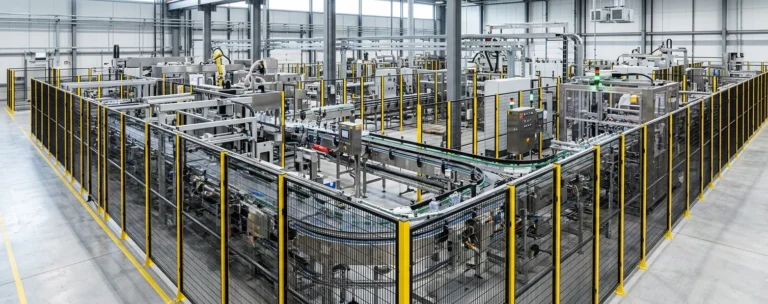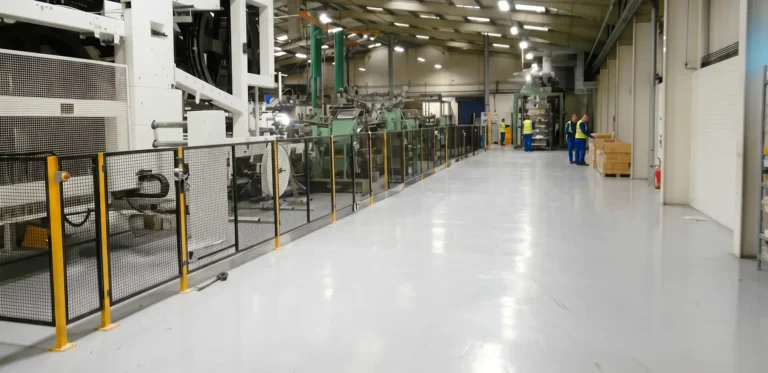
Industry 4.0 and automation have transformed the fulfilment sector in recent years and we can’t expect that trend to change any time soon. Facilities that were once defined by static racking and manual forklift operations have evolved into highly automated, integrated environments. Today’s modern warehouse is a highly developed network of high-speed Automated Storage and Retrieval Systems (AS/RS), autonomous mobile robots (AMRs), and multi-level conveyor networks.
Maintaining worker safety whilst optimising high-throughput in a modern warehouse means a traditional approach to machine guarding has to evolve. To maintain operational flow while ensuring compliance with PUWER (Provision and Use of Work Equipment Regulations 1998), warehouse managers must move beyond basic compliance and adopt an engineering-led safety strategy.
The "Integrator" Trap: Managing Complex Assemblies
A frequent point of vulnerability in warehouse safety arises from the creation of what’s known as complex assemblies. Modern operations rarely rely on standalone machines. It’s not uncommon for example for a conveyor from one supplier, a spiral lift from another, and a pallet wrapper from a third to be integrated into a single system.
When these machines are linked to function as an integrated line, they form a new complex assembly under SMSR (Supply of Machinery (Safety) Regulations 2008). This signifies an important legal change:
- The operating company becomes the manufacturer: This integration in the eyes of the law means that the warehouse operator (or prime contractor) becomes the legal responsible “manufacturer” of the entire line.
- Interface hazards: The interface between machines – such as the shear point between a conveyor and a wrapper – is often where safety fails, as neither original manufacturer may have guarded that specific gap.
In this instance, the operating company as ‘manufacturer’ becomes legally responsible under SMSR and also as employer under PUWER.
Validation is essential: You require a new conformity assessment and technical file to demonstrate how these interface risks were mitigated. Given the complexities involved, therefore, it’s advisable to work with a safety system specialist.
It’s important to secure independent validation by means of an audit of the complete assembly against BS EN ISO 12100 for risk assessment and BS EN 60204-1 for electrical safety, to ensure that integrated systems are safe and compliant.
Material Selection: Steel vs. Polymer
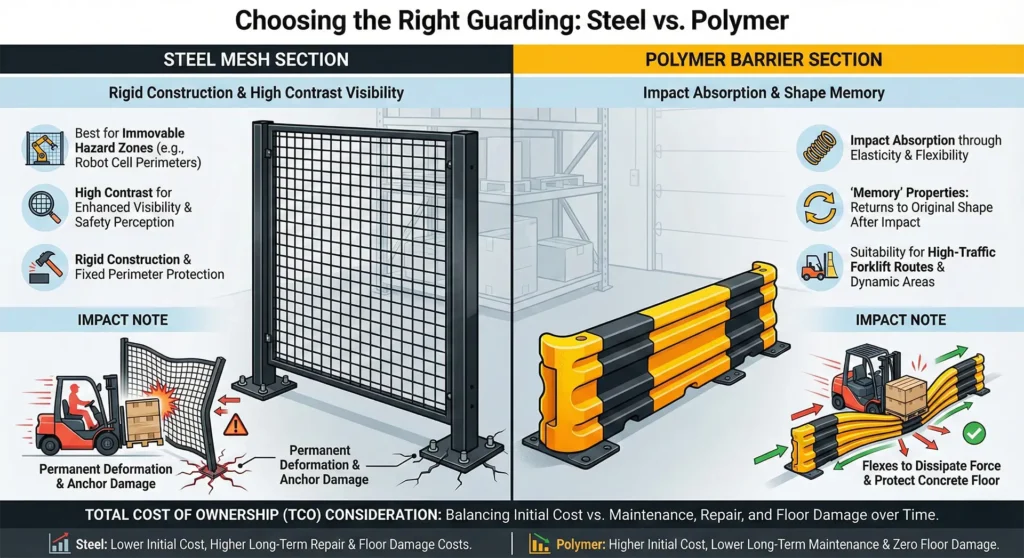
Historically, steel mesh has been the default for machine guarding. However, the rise of advanced polymer barriers has introduced a genuinely viable if not preferable alternative, particularly for traffic management. When choosing between the two, it’s not just a question of aesthetics; it is a calculation of mechanical properties and total cost of ownership (TCO).
Steel Wire Mesh (The Rigid Standard)
Steel remains the standard for robot cell perimeters where a clearly defined, immovable hazard zone is required.
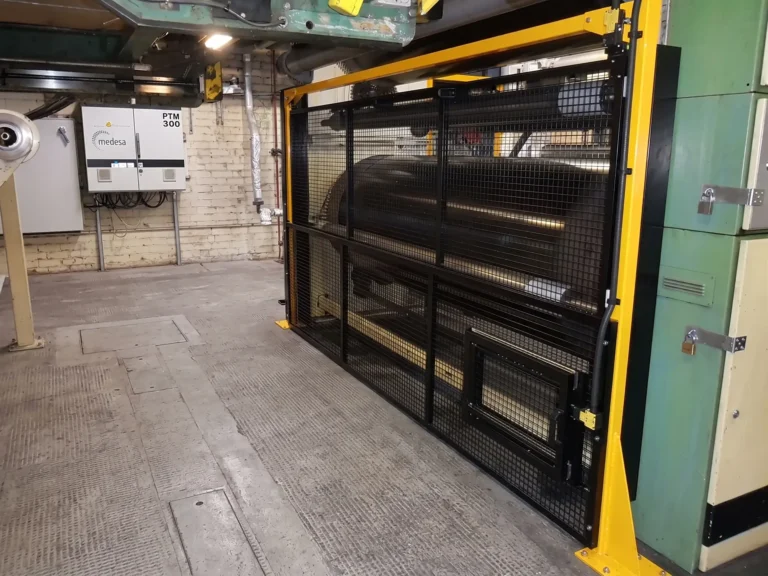
- Pros: It is rigid, provides excellent ventilation, and black mesh offers high contrast for observing working machinery.
- Cons: Steel deforms permanently upon impact. A forklift collision can destroy the panel and transmit the shock load into the floor anchors, often ripping them out and damaging the concrete slab.
Polymer Barriers (The Resilient Alternative)
Constructed from high-performance materials with “memory” properties, polymer barriers operate on the principle of elasticity.
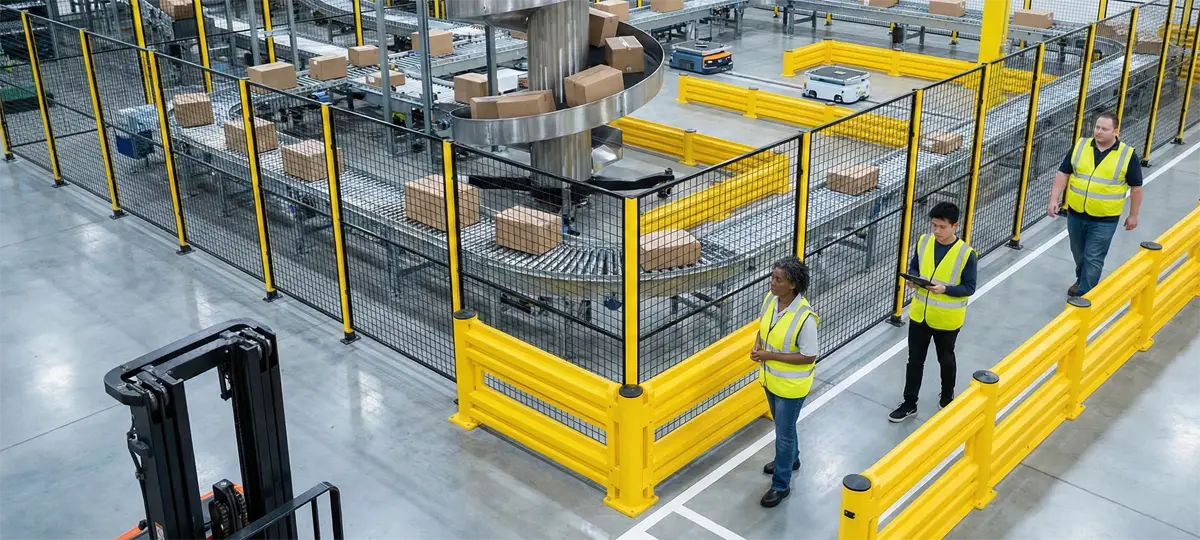
- Pros: They absorb impact energy by flexing and returning to their shape. This dissipates force rather than transmitting it to the fixings, significantly reducing floor damage.
- Hygiene: Polymer is impervious to corrosion and easy to wipe down, making it ideal for food and pharma logistics.
When we work with customers, we specify the right material for the right zone, utilising rigid steel for tight robot clearances and resilient polymer for high-traffic forklift routes.
Addressing "Whole Body Access" and Lock-In Risks
A significant hazard in large-scale machinery, such as AS/RS aisles and robotic palletising cells, is “whole body access”. This occurs when an operator enters a guarded zone – perhaps to clear a jam or retrieve dropped stock – and the gate closes behind them. If the machine is reset and restarted while they are inside, there is a significant risk of serious injury.
Reliance on either or both administrative controls (signage or training) isn’t sufficient to mitigate this risk. We recommend robust engineering controls:
- Trapped key interlocking: This mechanical system forces a strict sequence. The operator must isolate power to release a key, which is then used to open the gate. The key serves as a “personal safety key” – if the operator takes it inside with them, the machine literally cannot be restarted.
- Escape release: Gates must always have a means of opening from the inside without tools, even if locked from the outside.
Smart Technology for Uninterrupted Flow
Safety does not have to come at the expense of compromising speed and productivity. Modern opto-electronic devices allow for safe human-machine interaction without rigid barriers.
- Safety light curtains with muting: These devices use “smart” muting algorithms to distinguish between a pallet and a person. This allows goods to flow freely in and out of a hazardous zone (like a wrapper) while instantly stopping the machine if a human body part is detected.
- Laser scanners for AMRs and AGVs: For autonomous mobile robots and guided vehicles, laser scanners create dynamic warning and protective fields that adjust based on the vehicle’s speed and direction.
Partnering for Acceptable Safety
Machine guarding in warehouse operations isn’t just a box-ticking exercise for PUWER or SMSR compliance; it is a fundamental component of operational resilience. Inadequate guarding leads to severe injuries, legal penalties, and costly downtime.
Whether you are retrofitting an existing facility or commissioning a new automated line, Safety Systems Technology provides the expertise to navigate the complex regulatory landscape and ensure warehouse worker safety without compromising operating efficiency. From PUWER inspections to the installation of bespoke guarding solutions, we ensure your facility achieves high throughput whilst still ensuring workplace safety.
Next Step: Achieve high throughput without compromising safety. Contact Safety Systems Technology to validate your guarding strategy with a professional PUWER audit.
Frequently Asked Questions
What are the legal implications of integrating machines from different suppliers?
When standalone machines, such as conveyors, spiral lifts, and pallet wrappers, are linked to function as a single system, they form a ‘complex assembly’. Under the Supply of Machinery (Safety) Regulations 2008 (SMSR), the warehouse operator or prime contractor then becomes the legal manufacturer of the entire line. This shift in status means the operating company is responsible for the safety of the interfaces between machines, where hazards such as shear points often occur. A new conformity assessment and technical file are required to demonstrate that these integrated risks have been mitigated.
Why is polymer guarding often preferred over steel in high-traffic fulfilment routes?
While steel mesh remains the standard for rigid robot cell perimeters, advanced polymer barriers offer significant advantages in areas with high forklift traffic. Steel is rigid and deforms permanently upon impact, which can transmit shock loads into floor anchors and damage the concrete slab. In contrast, polymer barriers are engineered with memory properties that allow them to flex and return to their original shape after a collision. This elasticity dissipates impact energy, protecting both the vehicle and the floor fixings, which reduces the total cost of ownership over the long term.
How can safety light curtains maintain high throughput in busy facilities?
Modern safety light curtains utilise specialised muting algorithms to ensure that safety does not come at the expense of operational speed. These systems can distinguish between the profile of a pallet and that of a person. This allows goods to flow continuously in and out of hazardous zones, such as pallet wrappers, while ensuring the machinery stops instantly if a human body part is detected.
What is the risk of whole-body access and how is it managed?
Whole-body access is a significant hazard in large-scale machinery like automated storage and retrieval systems (AS/RS). It occurs when an operator enters a guarded zone to clear a jam or retrieve stock and the gate closes behind them. If the machine is restarted while they are inside, there is a risk of serious injury. To manage this, we recommend robust engineering controls such as trapped key interlocking. In these systems, an operator must isolate the power to release a personal safety key, which they take inside the cell. The machine cannot be restarted until the key is returned to the lock outside.
How does independent validation assist with PUWER compliance?
Independent validation involves an audit of the complete machinery assembly against standards such as BS EN ISO 12100 for risk assessment and BS EN 60204-1 for electrical safety. This process ensures that your facility meets the requirements of the Provision and Use of Work Equipment Regulations 1998 (PUWER). By validating your guarding strategy, you ensure operational resilience and protect your workforce from the risks associated with high-speed automated equipment.