Key Takeaways
- An interlocking switch stops hazardous machine motion when a guard is opened and can prevent restart until the guard is safely closed.
- Regulation 11 of PUWER 1998 and the Supply of Machinery (Safety) Regulations 2008 place a clear legal duty on interlocking guards that require regular access.
- BS EN ISO 14119 governs the design, selection and installation of interlocking devices, including measures to reduce the risk of defeat.
- Interlocking sits within a wider hierarchy of control and should only be used where fixed guarding cannot reasonably remove the need for access.
- The right interlock depends on three factors together: sector environment, the nature of the hazard, and how often the guard is opened.
- Guard locking is required wherever machinery has a hazardous run-down time or retains energy after it stops.
- Documentation, testing and ongoing review matter as much to compliance as the device itself.
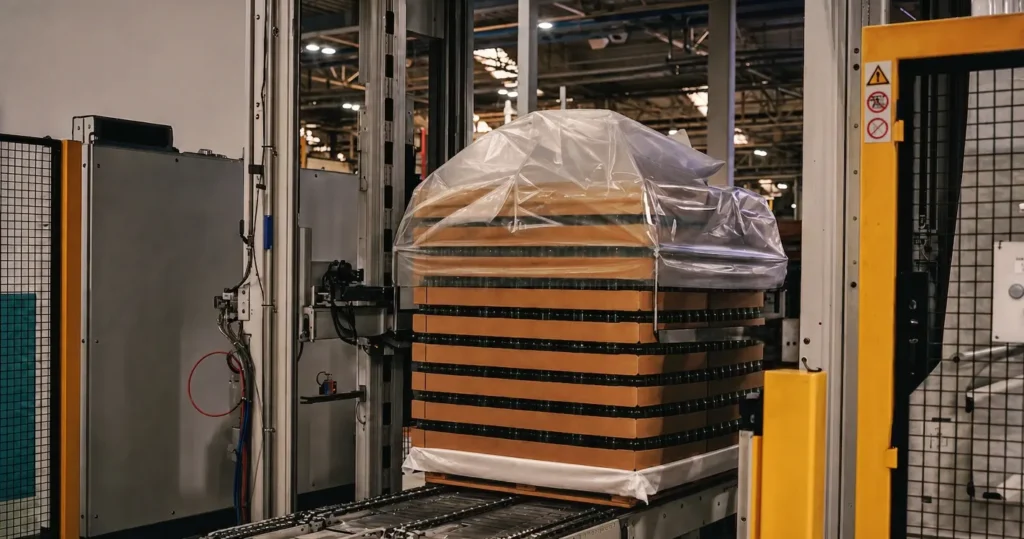
If you’re responsible for safety and machine guarding in your facility, you’ll know that even the simplest action can be a point of weakness in your safety set-up. Whether it’s opening a guard door a dozen times a shift for a quick clear down, or removing jammed material or debris so production can continue. Perhaps lifting a panel each month to check a drive belt or passing through a gate on a palletiser to change a reel of cellophane wrap.
These are all moments when a person and a hazard could meet and this is exactly why interlocking switches exist. An interlocking switch is a device fitted to a movable guard, door or gate that connects its position to the machine’s control system, cutting power or signalling a controlled stop the moment the guard opens. Advanced devices allow for guard locking, physically holding the guard shut until the equipment has run down and reached a safe state.
The difficulty is that “fit an interlock” is not one decision. There are several distinct technologies, each suited to different environments and patterns of use. Choosing incorrectly doesn’t always result in immediate failure. Rather the device may fail quietly, through wear, tampering, or even a mismatch with a function it was never designed to do.
This article sets out a structured way to choose the right interlock, covering the regulatory background, the main device types, and how sector, application and frequency of access should shape your decision.
The Legal Framework and the Hierarchy of Control
Under Regulation 11 of the Provision and Use of Work Equipment Regulations 1998 (PUWER), employers must prevent access to dangerous parts of machinery, normally through fixed guarding, but where a guard needs to be opened regularly, an interlocked guard may be required instead. The Supply of Machinery (Safety) Regulations 2008, implementing the Machinery Directive in UK law, place parallel duties on manufacturers and suppliers of new and modified equipment, governing UKCA and CE marking and the Declaration of Conformity that should accompany any safety component.
This legal duty sits within a wider hierarchy of control, set out in BS EN ISO 12100 and reflected directly in PUWER Regulation 11(2), which requires protective measures to be applied in a specific order rather than whichever is most convenient.
Generally, this means eliminating the hazard through design wherever possible. Risk reduction through fixed guarding is always the preferred control where regular access is not required. Access points should be safeguarded where entry is genuinely needed, using interlocked guards or devices such as light curtains. Administrative controls, such as signage and training, should be employed but only as a final layer and never a substitute for physical safeguarding.
In practice, an interlock should not be the first decision made. We frequently encounter sites where an interlock has been fitted to a guard that, on closer inspection, did not need frequent opening at all. A properly designed fixed guard would have been both simpler and more compliant.
Beyond PUWER, several standards shape device selection:
- BS EN ISO 14119 for the design and selection of interlocking devices.
- BS EN ISO 13849-1 and IEC 62061 for the functional safety Performance Level or Safety Integrity Level of electrical circuits.
- EN 60204-1 and EN 60947-5-1 for electrical equipment and positive opening contacts.
- ATEX/UKEX certification for potentially explosive atmospheres.
A well-specified interlock should always be traceable to a named standard, not simply described as “safe” or “certified.”
The Main Types of Interlocking Switch
Tongue, or Key, Interlocks
These use a mechanical actuator that inserts into a switch body on the guard frame. Coded versions use a uniquely shaped actuator, making the switch far harder to defeat than older, uncoded designs.
Guard-Locking Switches
These hold the guard shut until it is safe to open. Safety locking protects people by keeping the guard closed until hazardous motion has stopped; process locking keeps a guard shut for production reasons. Where a machine has a residual energy source such as a coasting blade or flywheel, a locking interlock is essential.
Non-Contact Interlocks
Often using RFID or coded magnetic technology, sense guard position without a physical key. They suit hygienic or washdown environments, since there are no exposed moving parts to trap contamination.
Trapped-Key Interlock Systems
Trapped key devices use a purely mechanical sequence, with a key held captive while the machine runs. Being entirely mechanical, they suit dirty, wet or high-vibration environments.
Interlocking Device Comparison
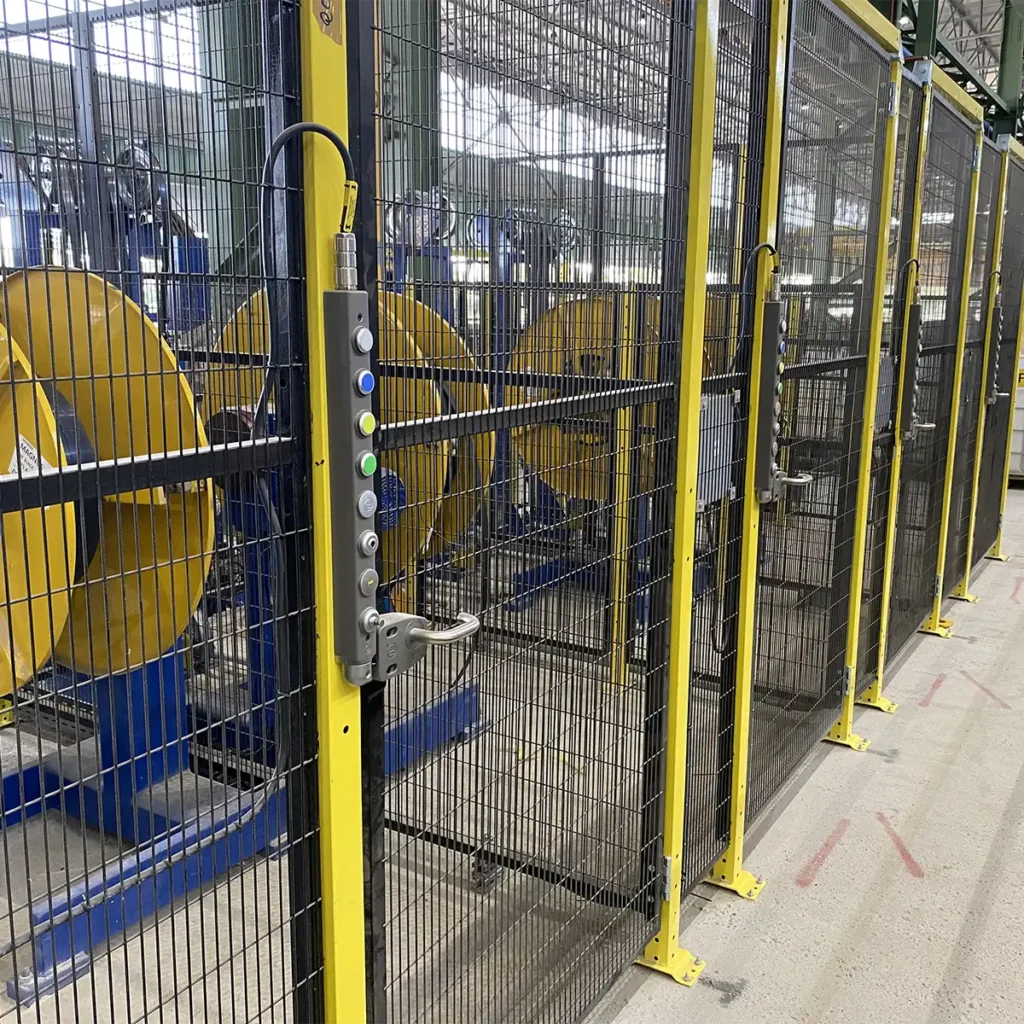
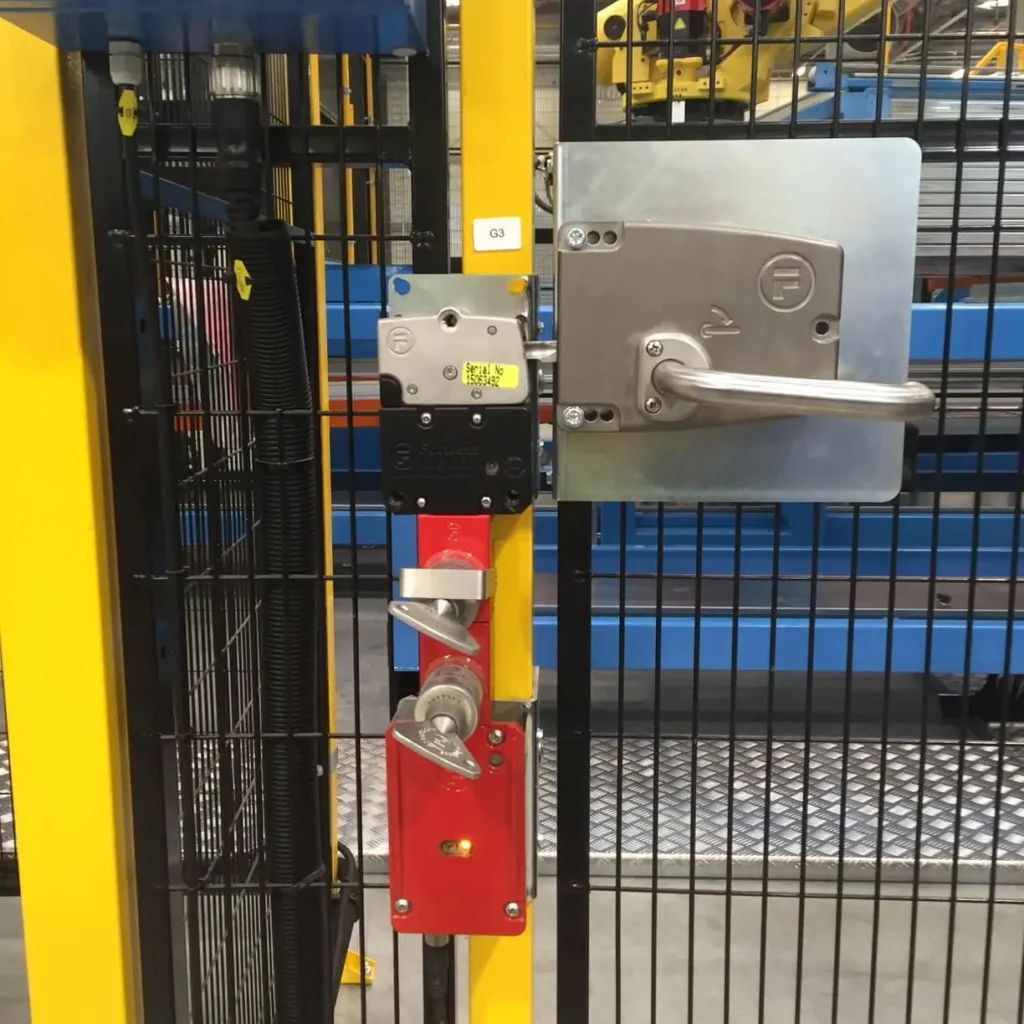
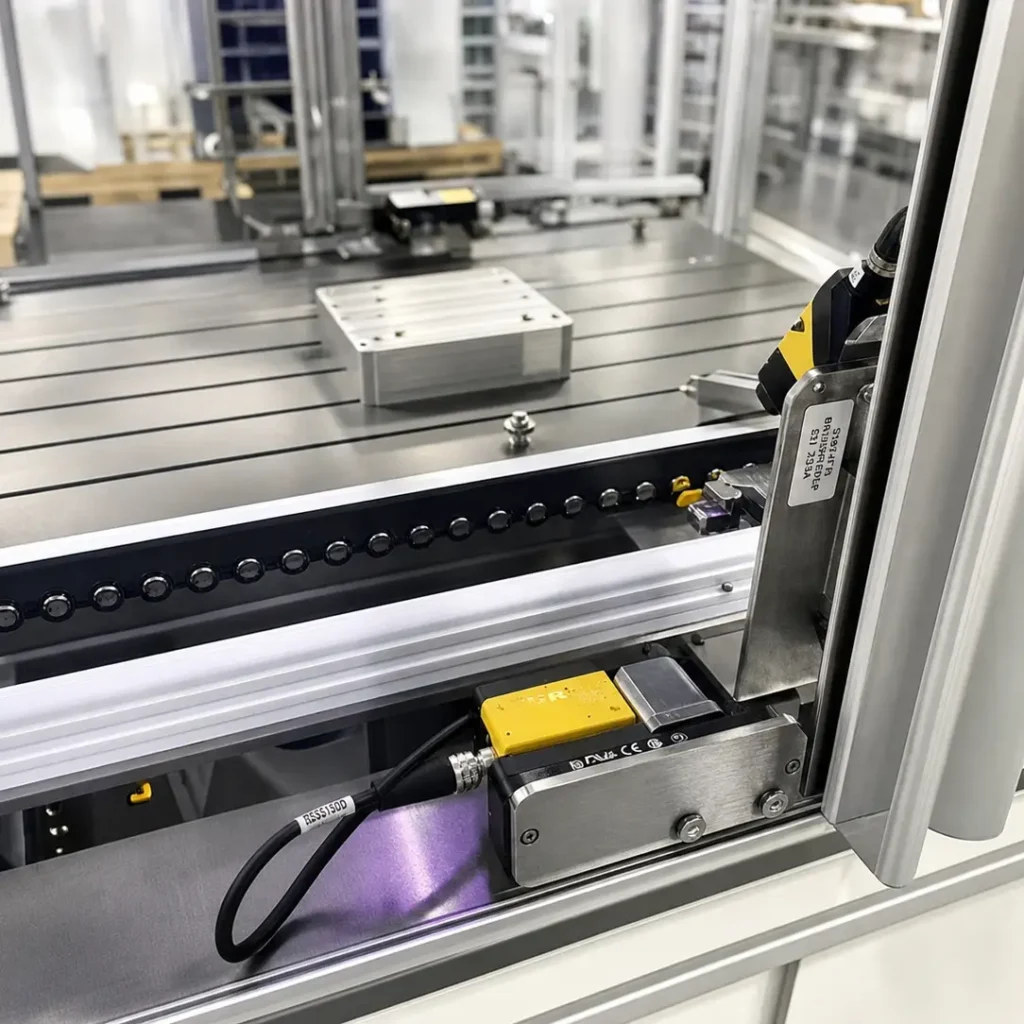
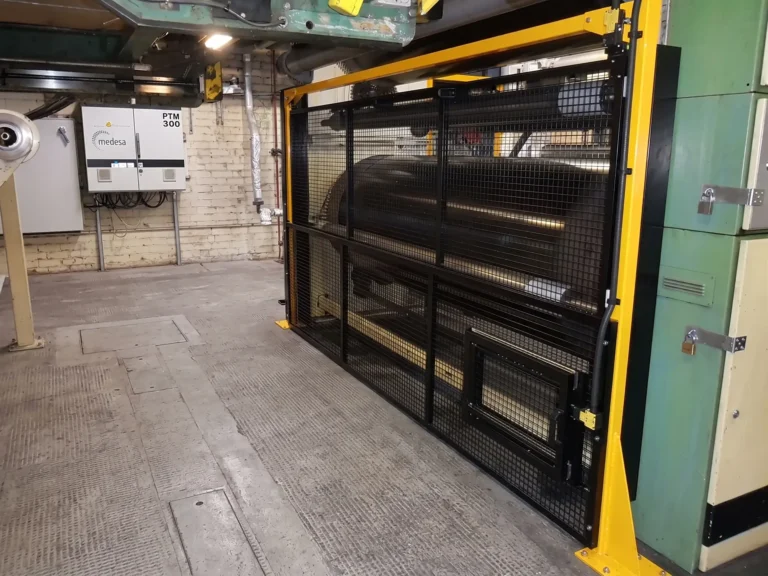
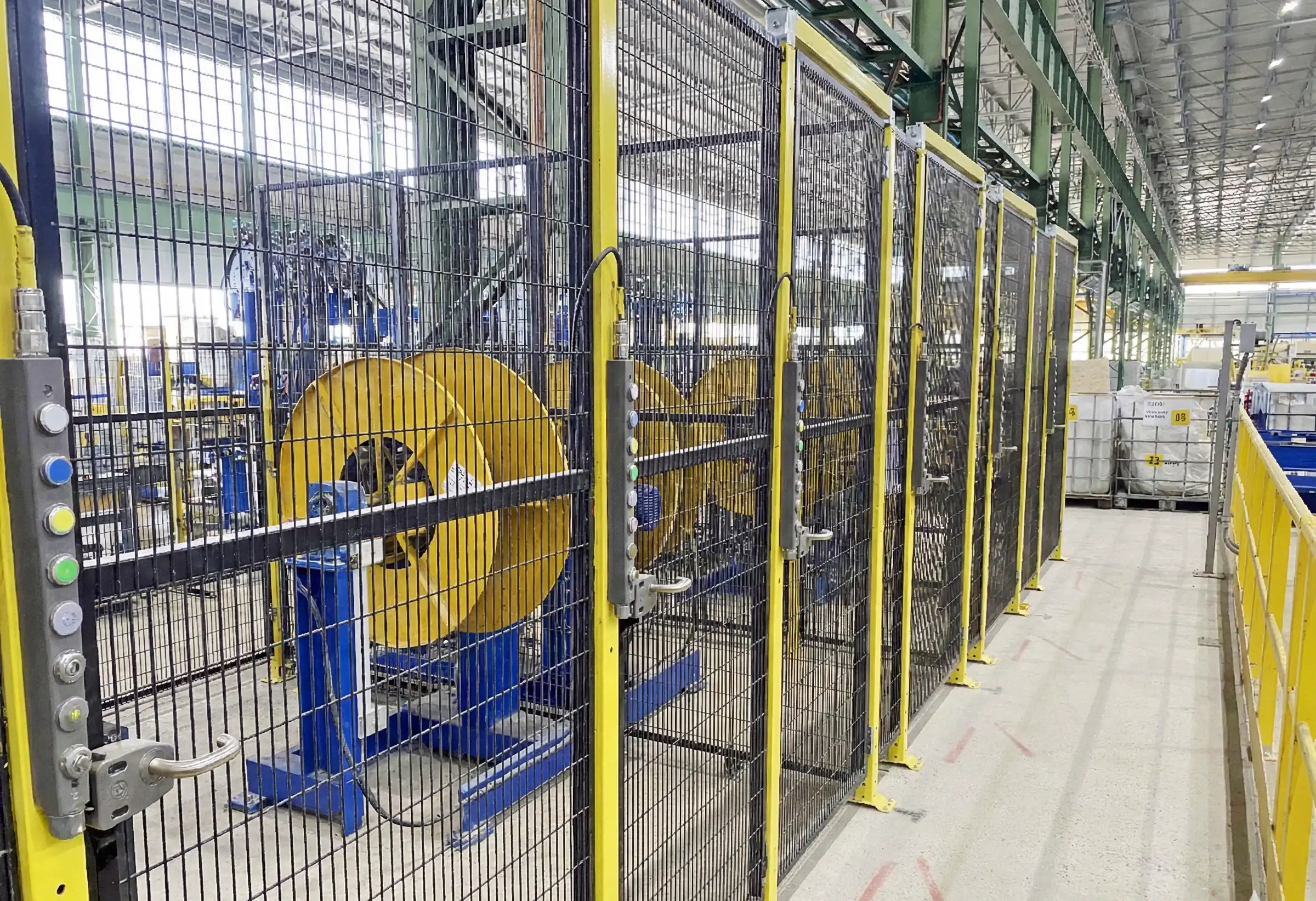
Images 1 and 2 courtesy of Fortress Safety
Two further, related controls are also worth knowing, since they are sometimes confused with interlocking but serve a different purpose:
Safety Light Curtain Blocking or Muting
Some facilities use blocking or muting arrangements to allow an infrared safety light curtain to be temporarily bypassed during a defined stage of a process, such as material passing through an opening. This requires its own risk assessment and should never be treated as equivalent to guard interlocking.
Energy Isolation Verification
Where residual electrical or stored fluid power energy is a concern, voltage presence indicators and monitored safety valves provide a way of confirming that energy has genuinely been isolated before access is granted. These sit alongside interlocking, rather than replacing it.
Choosing by Sector, Application and Frequency
There is no single “best” interlock. The right choice depends on three factors working together. Looking at these each in turn:
Sector Environment
Sector environment shapes the physical demands placed on the device.
Food and beverage, and pharmaceutical facilities generally need hygienic, corrosion-resistant devices, often stainless steel, rated to at least IP67 for washdown.
Steel making, recycling and other heavy industrial settings call for rugged, metal-bodied switches or trapped-key systems able to withstand dirt, impact and vibration.
Defence and aerospace applications typically demand a higher standard of documentation and traceability, supporting a demonstrable Performance Level throughout the equipment’s life.
Engineering workshops, where access tends to be occasional, are often well served by standard coded tongue interlocks.
Packaging production lines, with frequent changeovers, tend to favour non-contact switches that tolerate high cycle counts without mechanical wear.
Application
The application, meaning the specific hazard a guard is protecting against, determines whether guard locking is necessary. If opening the guard would expose someone to parts that continue moving after the machine has been switched off for example, such as a coasting blade or a motor with a significant run-down time, an interlock device is needed to ensure the guard or gate remains locked until the machine has run down.
Where machinery stops the moment power is removed, a non-locking device may be adequate, provided the signal to the control system is reliable. High-consequence applications, such as presses or robotic cells, usually call for dual-channel monitored interlocks capable of supporting Category 3 or 4 architectures.
Frequency of Access
Frequency of access affects both device choice and the maintenance regime around it. Guards opened rarely, perhaps only during annual maintenance, can often use simpler coded interlocks, though ISO 14119 specifically highlights the risk of infrequently used interlocks seizing up unnoticed, so periodic testing remains essential even when access is uncommon. Guards opened daily, or several times a shift, benefit from coded tongue or non-contact switches designed for durability under repeated use, while very high frequency applications, such as packaging changeovers performed many times a shift, are usually better served by non-contact coded switches, which avoid the mechanical wear associated with repeated tongue insertion.
Considered together, these three factors usually point clearly towards an appropriate device family, even before cost or supplier preference enters the conversation.
What Happens When the Wrong Interlock Is Chosen
The consequences of a poorly matched interlock aren’t usually immediately apparent and this is partly what makes them dangerous.
An uncoded switch may be defeated with a simple tool or spare magnet, so removing the safety function it was meant to provide. A device with the wrong ingress protection rating may corrode or short out in a washdown environment. Fitting a non-locking interlock to a machine with a genuine run-down hazard leaves a window in which someone could be exposed to moving parts before they have fully stopped.
Where an investigation finds a guard was easily defeated or an interlock was unsuited to its environment, the consequences extend beyond the immediate safety risk and can affect compliance. HSE can issue Improvement or Prohibition Notices and in more serious cases, prosecution under the Health and Safety at Work Act becomes a possibility.
Best Practice: A Simple Path to Compliance
At Safety Systems Technology, we take customers through the following process:
- Carry out a risk assessment before considering any specific product.
- Confirm fixed guarding has been properly ruled out first.
- Match the device to the Performance Level or Category the risk assessment requires.
- Validate the installation, checking alignment, mounting and positive opening contacts.
- Test and verify, including stop-time testing where locking timing is safety-critical.
- Keep documentation, including the Declaration of Conformity and inspection records, audit-ready.
- Review the arrangement periodically, as use, wear and guidance all change over time.
Bringing It All Together
Choosing the right interlocking switch isn’t about finding the single “correct” product. It is about working through the sector, the specific hazard, and how often a guard genuinely needs to be opened, then matching that assessment to a device and control architecture that meets the relevant standards.
We partner with manufacturers across all sectors, using our expertise to deliver high quality and effective safety solutions that ensure compliance, minimise risks, and improve manufacturing operational efficiency. Our tailored, end-to-end approach provides customers with long-lasting solutions, safeguarding both workforce and equipment.
If you would like support reviewing your current guarding and interlocking arrangements, our team is always happy to advise.
Need help choosing the right interlock for your facility?
Frequently Asked Questions
Does PUWER require interlocking on all machine guards?
Not on all guards. PUWER requires interlocking specifically where a guard needs to be opened regularly to allow access, such as for changeovers or routine adjustment. The simpler and more robust option where access is not required, or if so then very infrequently, is usually fixed guarding.
What is the difference between a fixed guard and an interlocked guard?
A fixed guard has no moving parts and is intended to remain permanently in place, typically removed only for major maintenance using tools. An interlocked guard is designed to be opened during normal operation, with the interlock ensuring the machine stops or cannot start whenever it is open.
When is guard locking necessary rather than a standard interlock?
Guard locking is necessary whenever opening the guard would expose a person to a hazard that has not yet ceased, such as a coasting blade, residual pressure, or a robotic arm completing its cycle. Where machinery stops immediately on power removal, a standard, non-locking interlock is often sufficient.
How often should interlocking switches be inspected or tested?
This should be set by risk assessment rather than a single fixed rule. Frequently used interlocks are usually checked as part of routine maintenance. Rarely used ones still need periodic physical testing however, since ISO 14119 highlights the risk of such devices seizing unnoticed between uses.
Can non-contact interlocks be used in food or pharmaceutical environments?
Yes, and they are often well suited to these settings. Coded non-contact switches have no exposed moving parts to trap contamination, can be housed in smooth, washable enclosures, and are commonly specified with high IP ratings for washdown durability.
Who is responsible for ensuring an interlocking switch is correctly specified?
For new machinery, the manufacturer is responsible for building in suitable guarding and interlocking under the Supply of Machinery (Safety) Regulations 2008 before the machine is placed on the market. For equipment already in use, this responsibility shifts to the employer or duty holder under PUWER, particularly when guards are retrofitted or modified. In practice, specification is usually a shared exercise between engineering, compliance and, where appropriate, a specialist safety partner.